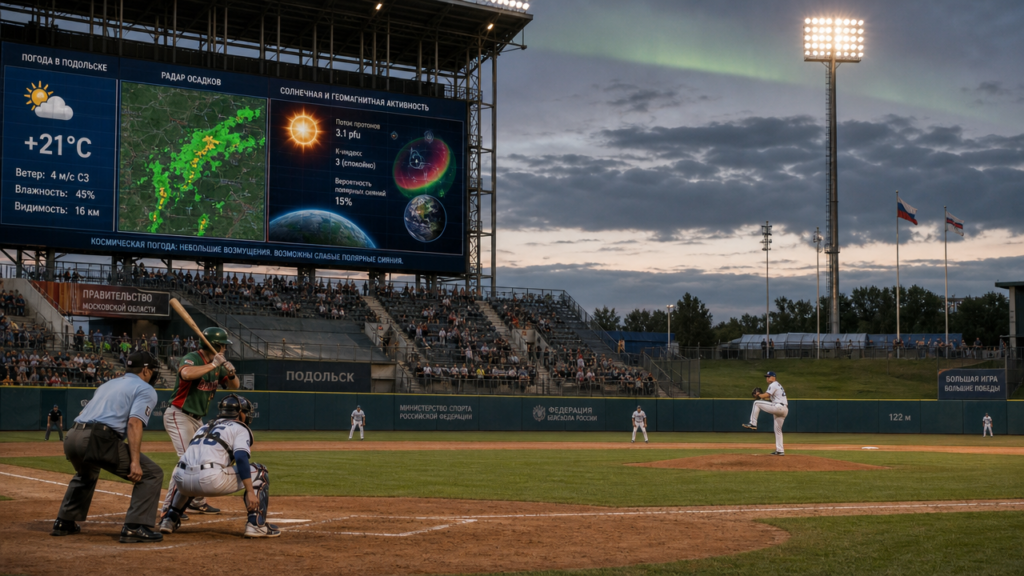
Weather data can help frame a baseball preview, but it should support rather than replace analysis of starting pitchers, lineups, bullpens, and market prices. A local reading of 12°C with a feels-like temperature of 7°C is expected to give way to a 23°C high, light wind at 4 m/s, 71% humidity, and visibility of 16 km. Those conditions suggest a stable setting without an obvious delay threat, although the effect on scoring depends on the venue and roof status.
A geomagnetic storm warning has no direct effect on pitch movement, batted-ball carry, or a baseball total. It may matter to satellite-dependent tracking and broader forecast confidence, but it should not be treated as a core on-field input.
Starting pitching sets the price
Pitcher quality remains central to any side or total. Weather can adjust the expected run environment, yet it cannot replace information about strikeout ability, contact quality, pitch mix, or workload. A forecast showing mild temperatures and light wind offers no strong carry boost, so the starting-pitcher matchup should carry most of the analytical weight.
Bullpen availability and late-game margin
Recent bullpen usage can influence a run line more than a modest weather change. Back-to-back appearances, limited rest, and a shortage of high-leverage options may increase late-game volatility. A stable forecast reduces the chance that a delay disrupts pitching plans, but it does not establish an edge by itself.
Weather and space-weather inputs
The local conditions point to a mild day with light wind, good visibility, and no clear indication of a rain delay. A separate forecast for Joliette includes an anomalous heat warning on September 26, with a high of 22°C, followed by cooler and cloudier conditions over the next several days. Such changes are relevant when comparing venues and travel schedules, but they should be translated into baseball effects cautiously.
Space-weather information belongs in a separate category. Aurora forecasts can track expected auroral activity globally for up to three days using the Kp index. A geomagnetic storm warning may also trigger alerts, while a research model has been developed to predict solar activity up to 12 hours before it becomes visible at the surface. That model is not yet operational. None of these signals provides a direct basis for a baseball pick.
Bet: Use the weather forecast as a risk check for delays, wind, and unusual temperatures. Do not assign a side or total from weather data alone; the available information does not include the pitcher, lineup, bullpen, or market details needed for a supported play.